GREECE 2009-2025
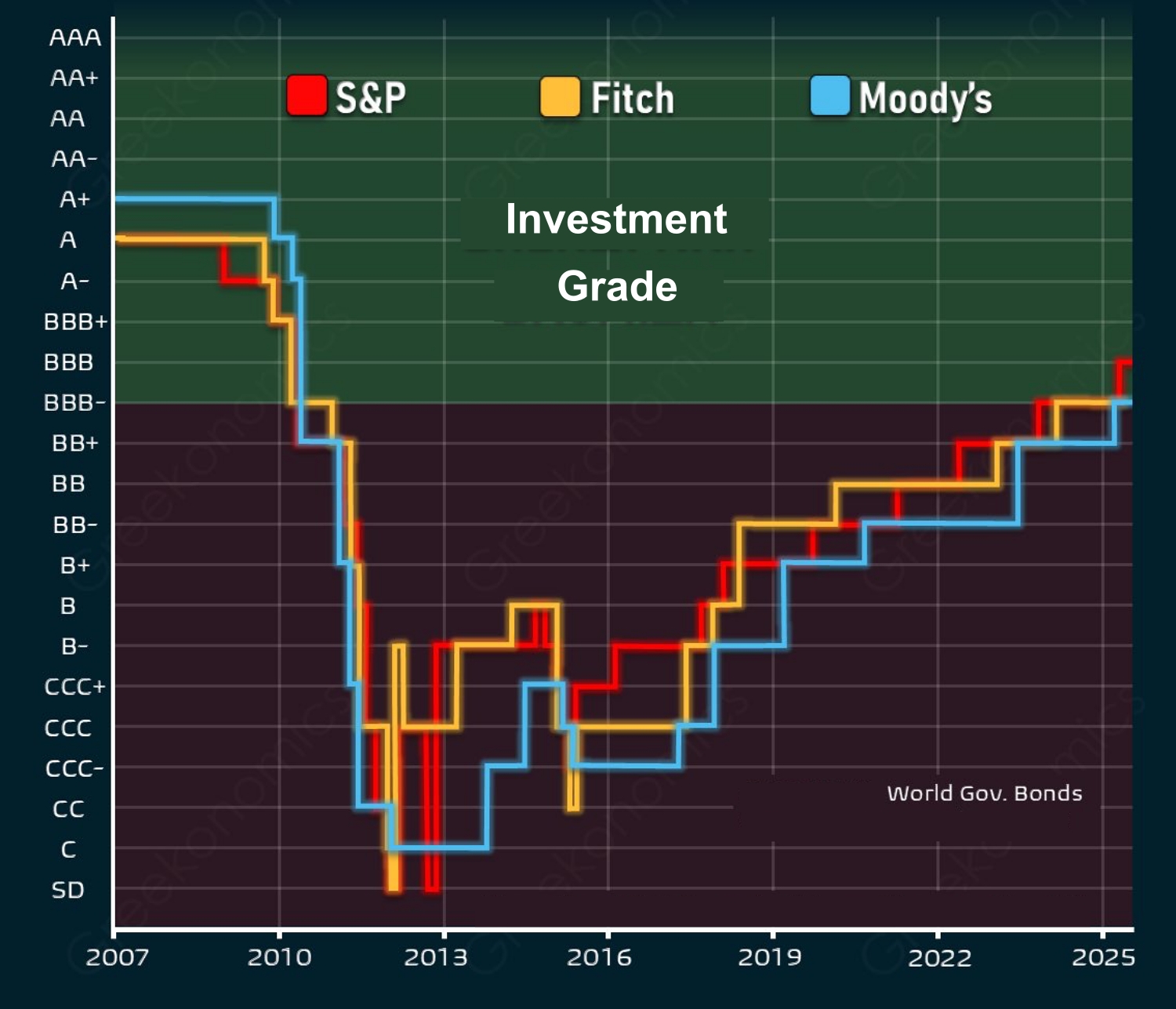
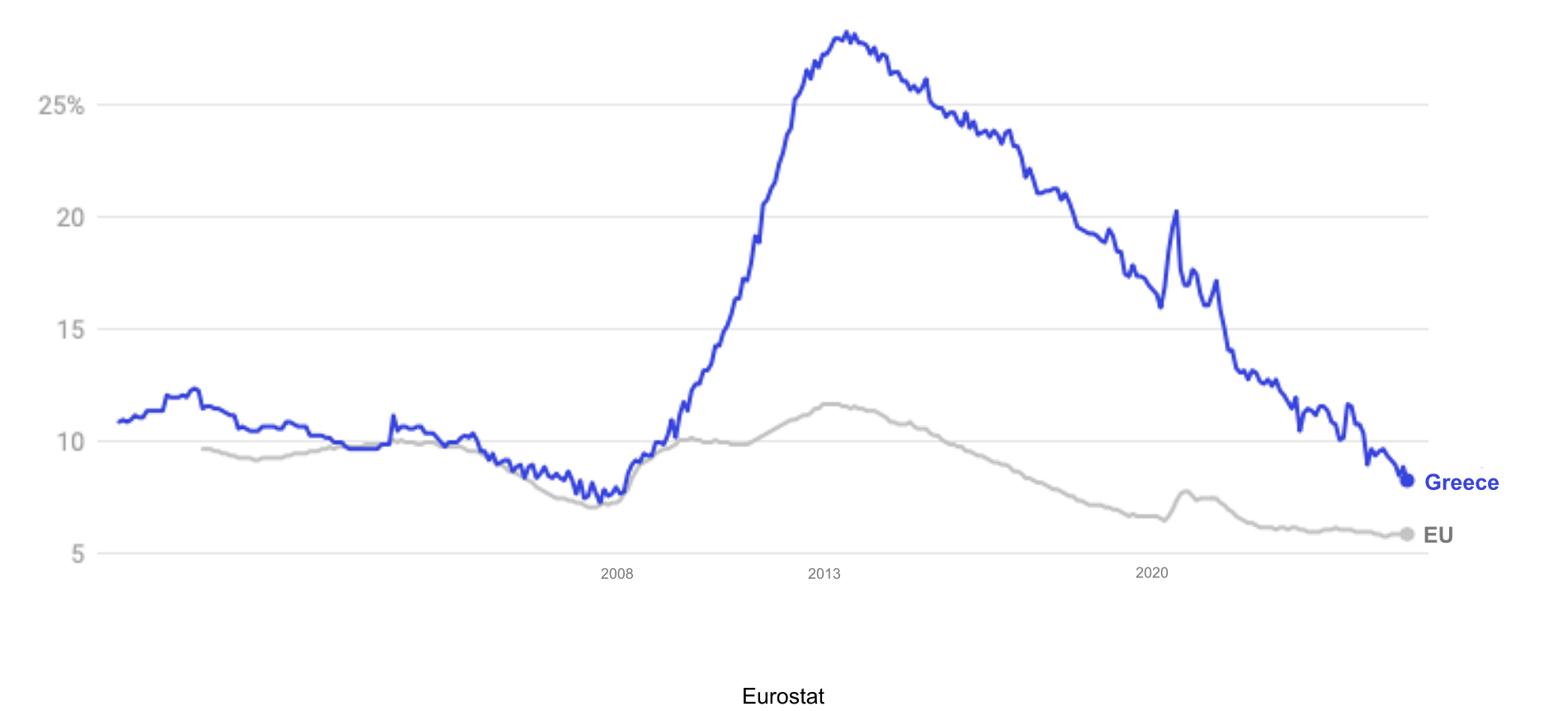
During the economic crisis (2009-2018), Greece lost over 25% of its GDP while the unemployment rate skyrocketed to 27,5% – a loss not previously seen in any European nation during peacetime. During the peak of the Greek debt crisis, the country’s credit rating was downgraded to junk status by all major rating agencies — with S&P lowering it as far as CCC in 2015 signaling a high risk of default.
From 'crisis' to 'economic miracle'
Since its exit from the bailout programmes (2018), Greece gradually restored investor confidence through fiscal discipline and structural reforms. As of 2023–2024, the country has regained investment grade status from all major credit rating agencies: S&P Global rated Greece at BBB-, Fitch at BBB, Moody’s at Baa3, and DBRS Morningstar at BBB (low) — all indicating a stable or positive outlook and marking a full return to the investment-grade club after more than a decade.
GDP
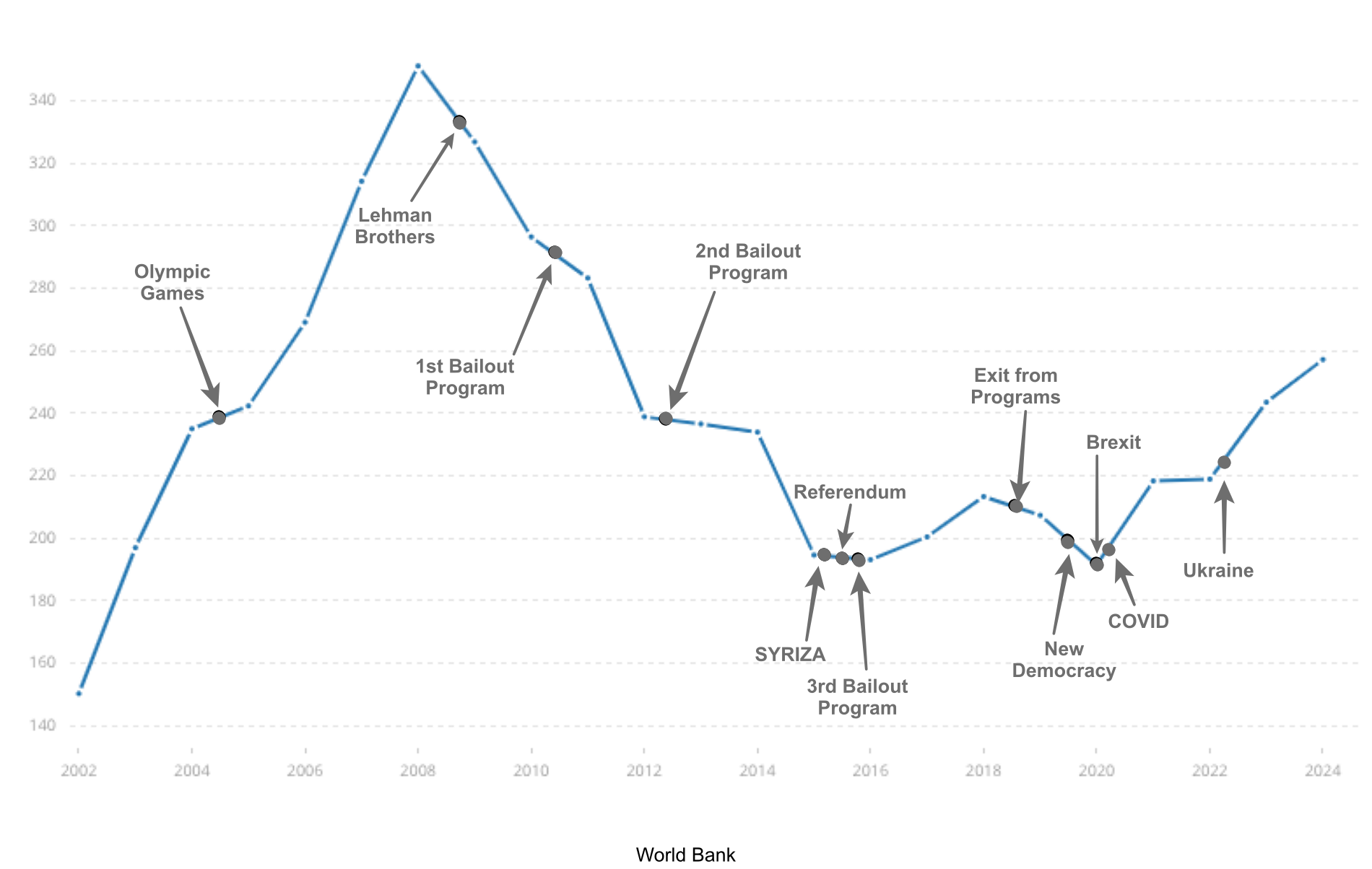
The early post-Olympic years saw moderate growth fueled by public investments and increased consumption. However, the 2008 global financial crisis severely impacted the Greek economy, leading to a deep recession and a sovereign debt crisis that triggered three bailout programs between 2010 and 2018. During this period, GDP contracted sharply, losing over a quarter of its value in real terms. Since the end of the bailout era in 2018, Greece has experienced a gradual but uneven recovery, with modest GDP growth disrupted by the COVID-19 pandemic in 2020. As of recent years, the economy is cautiously rebuilding, supported by reforms, increased tourism, and European funding, yet still facing structural challenges and high public debt.
Investments
Gross Fixed Capital Investments
Surplus
Credit Rating
After the outbreak of the economic crisis in 2009, Greece’s rating fell sharply and greek bonds were classified as junk status, culminating in the complete severance of the Greek economy from international markets during the time of the second memorandum.
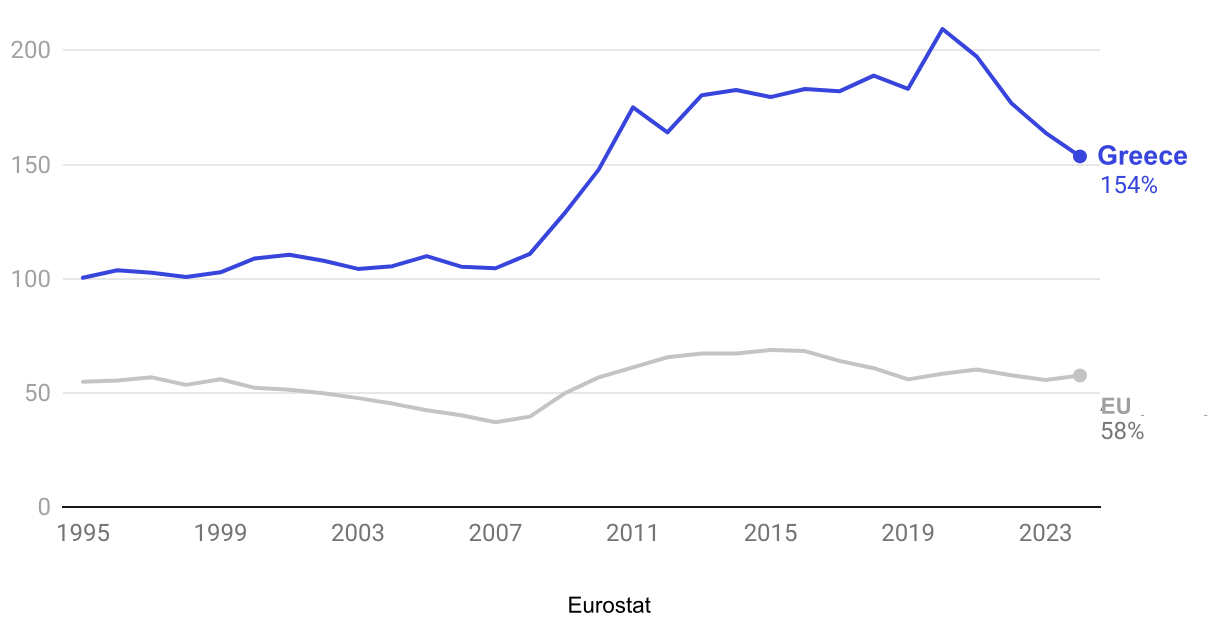
Debt as % of GDP
s
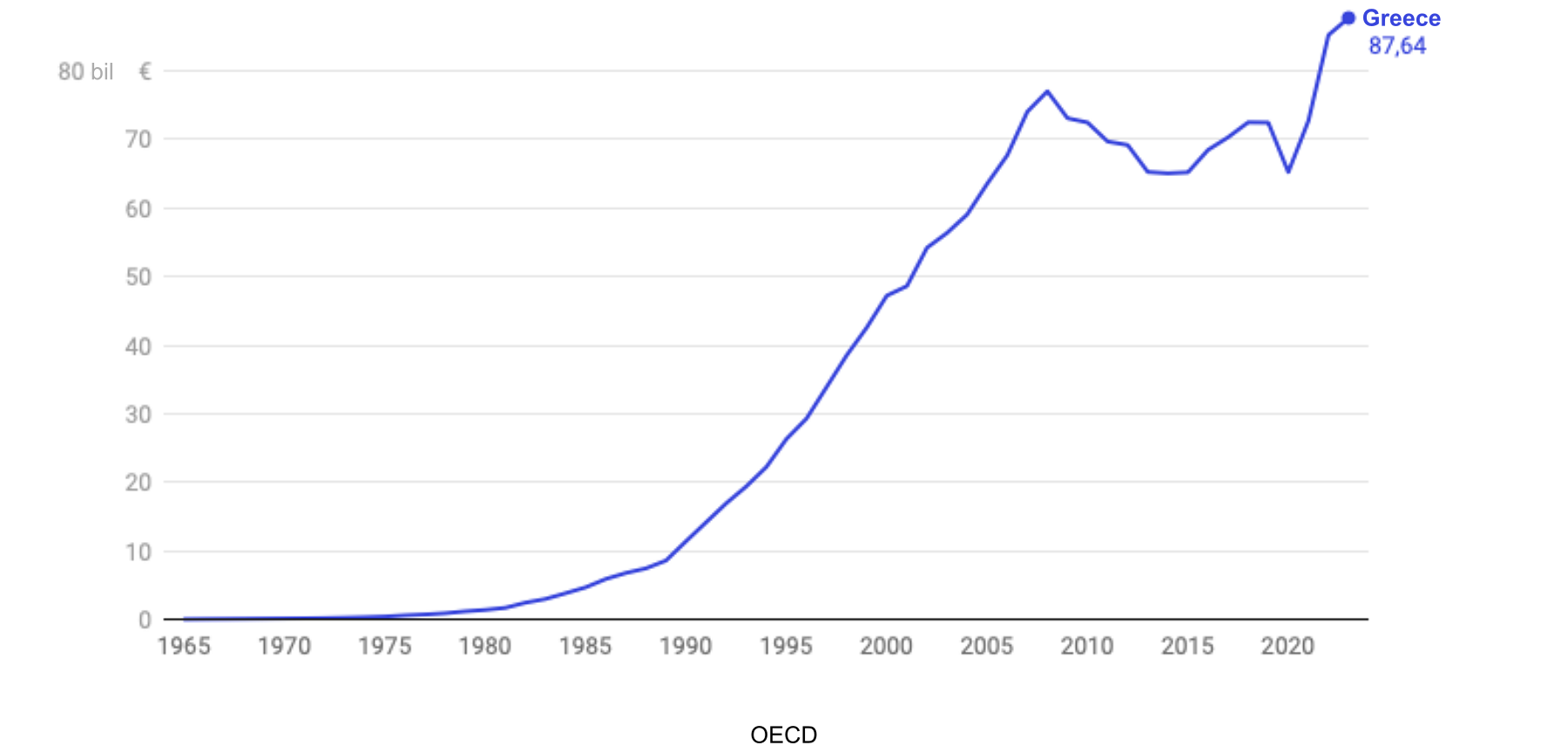
Tax revenues
s
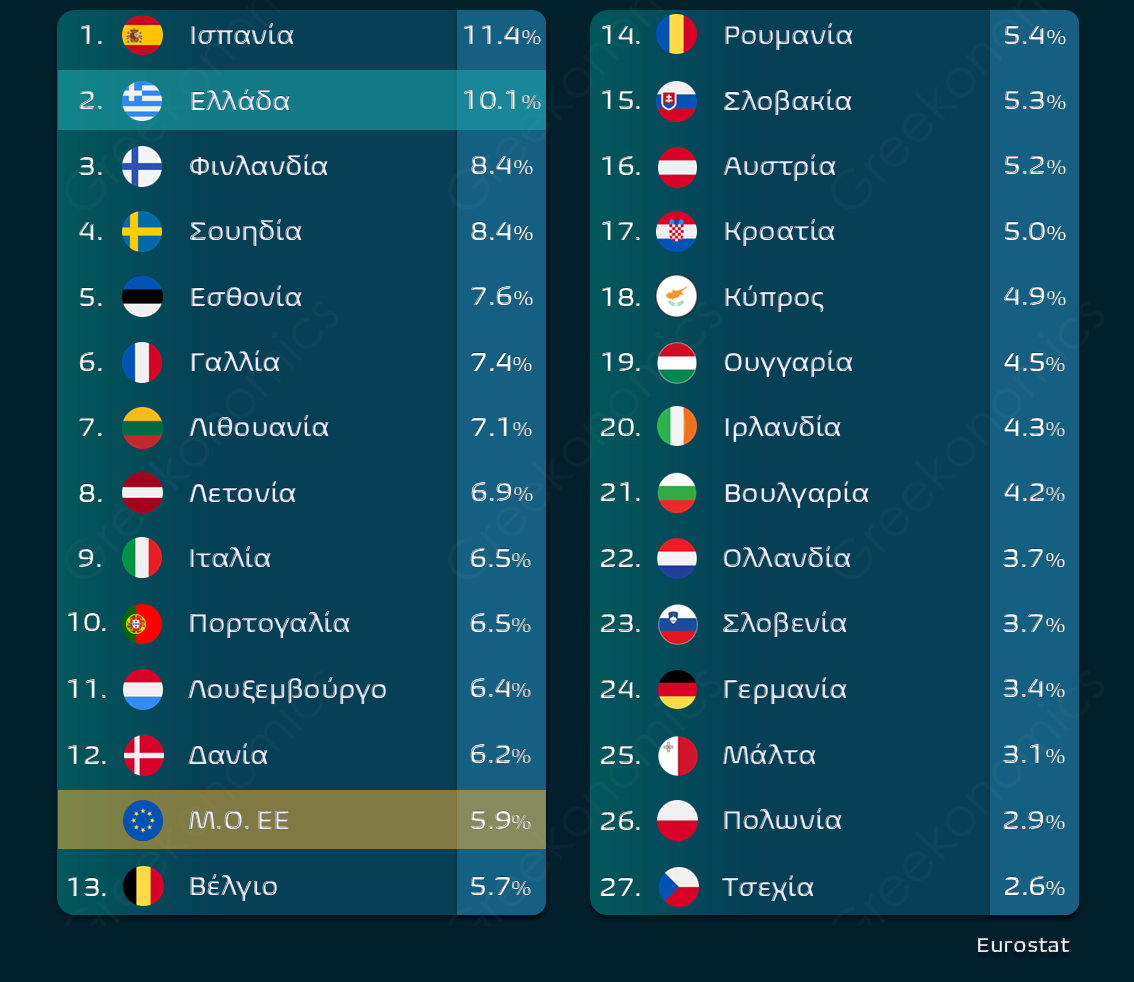
Unemployement
s
Recovery from crisis
Greece has lost 25%-30% of its GDP during crisis. It is still far away until GDP is recovered to what it was before the crisis.
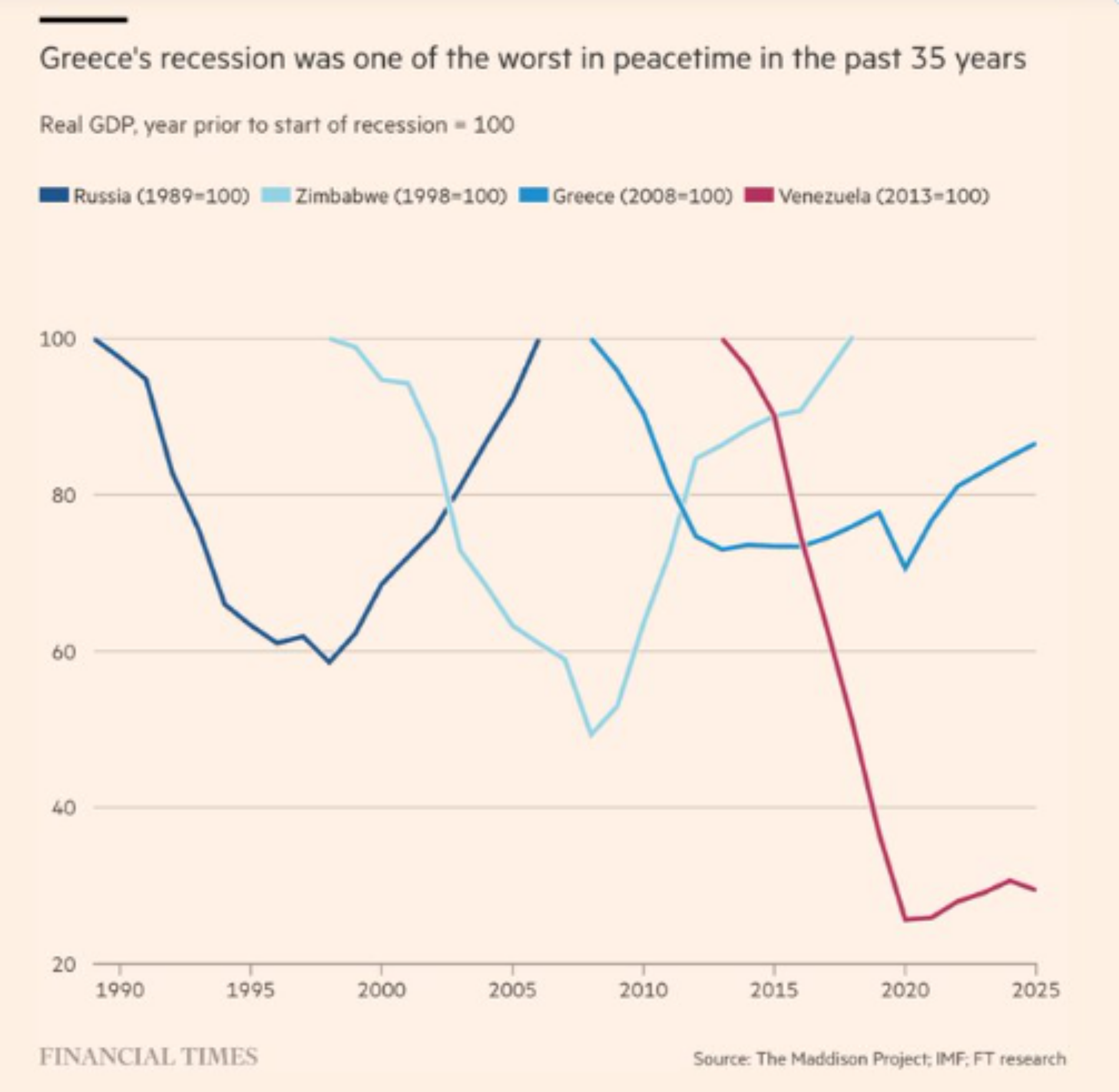
The dark side of the moon
Purchasing power
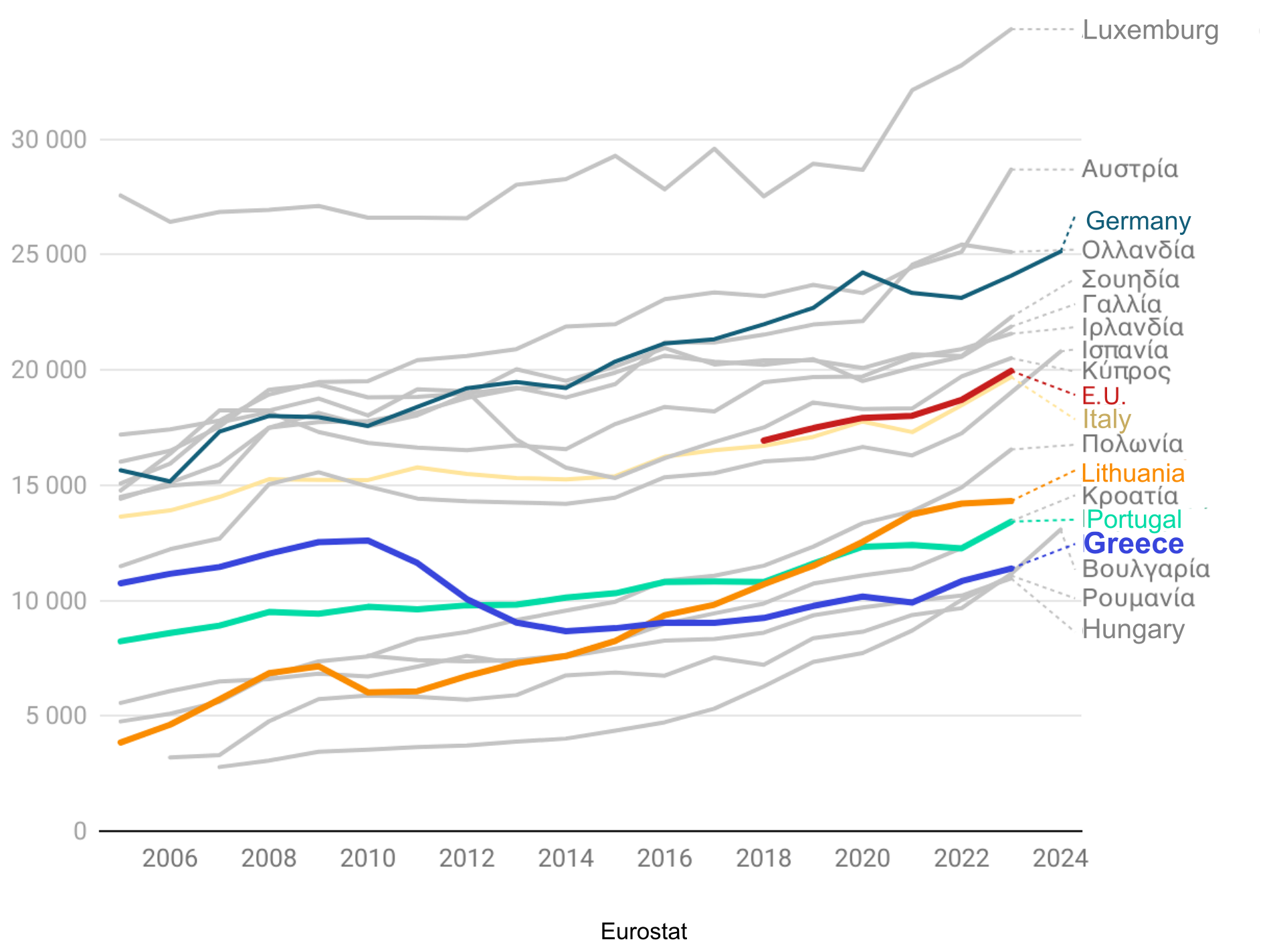
GDP per capita
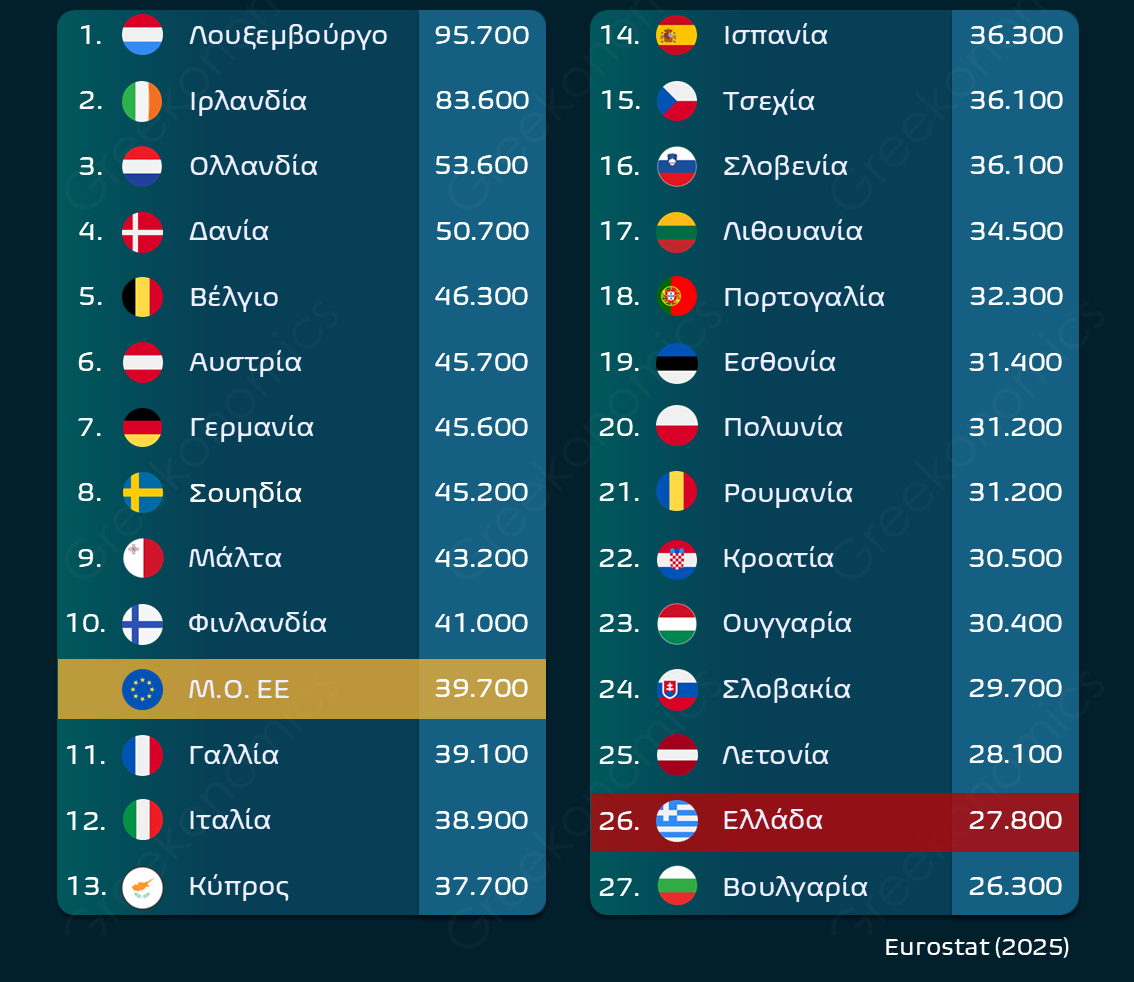
Change in income
Real disposable income compared to 2008
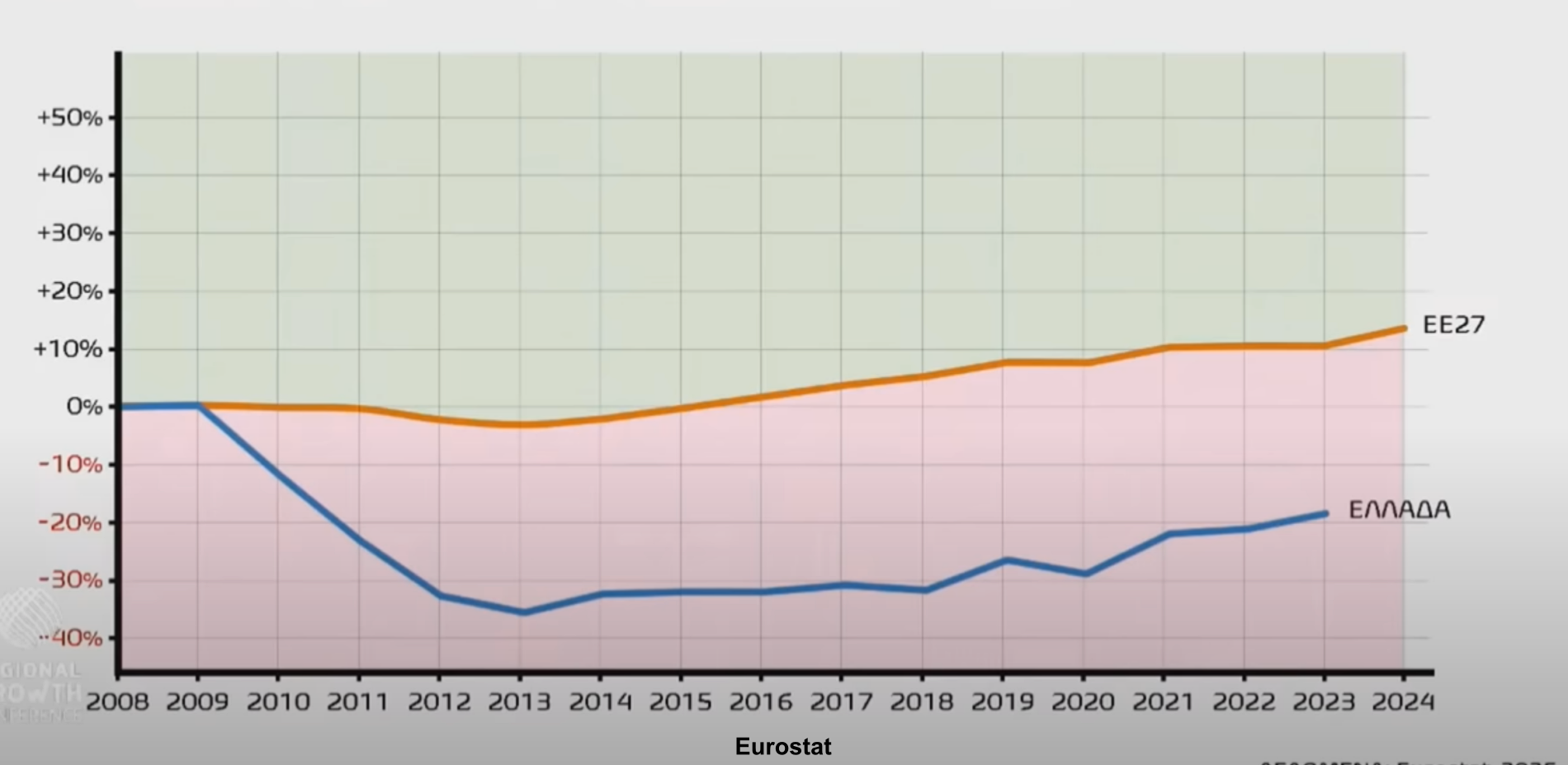
Income % for housing
The average Greek household is burdened more than any other similar household in the European Union – a situation that has been consistently the case since 2011! More specifically, in Greece each household spends on average just under twice what is spent on average in the European Union.
*The percentage corresponding to housing expenses in relation to net income – both measured in PPS. Purchasing Power Standard is an artificial currency unit used by Eurostat to equalize the purchasing power of different countries by eliminating price level differences, allowing for fair economic comparisons.
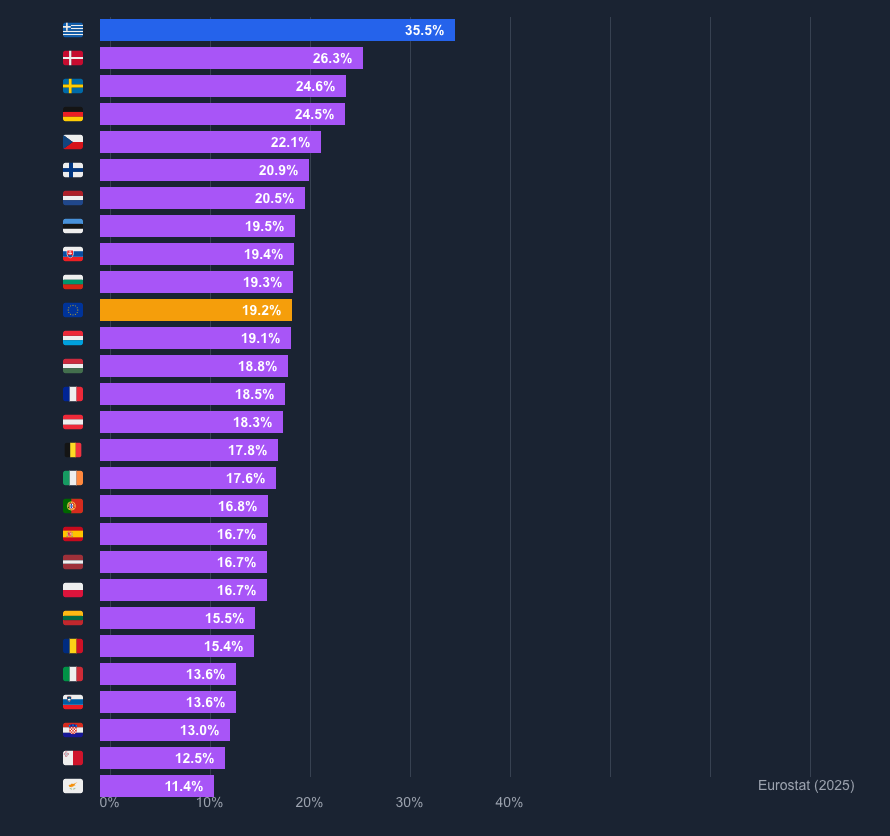
Unemployment %
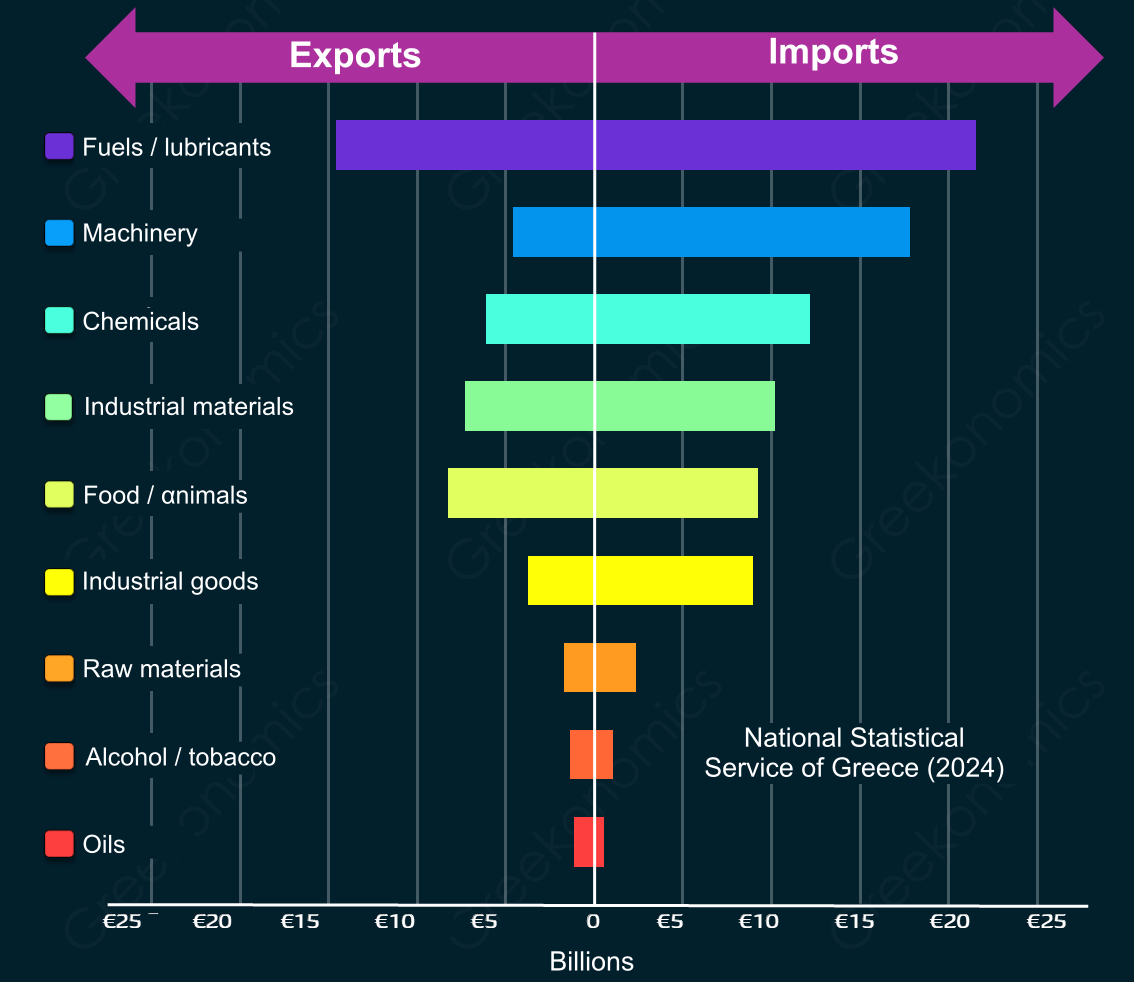
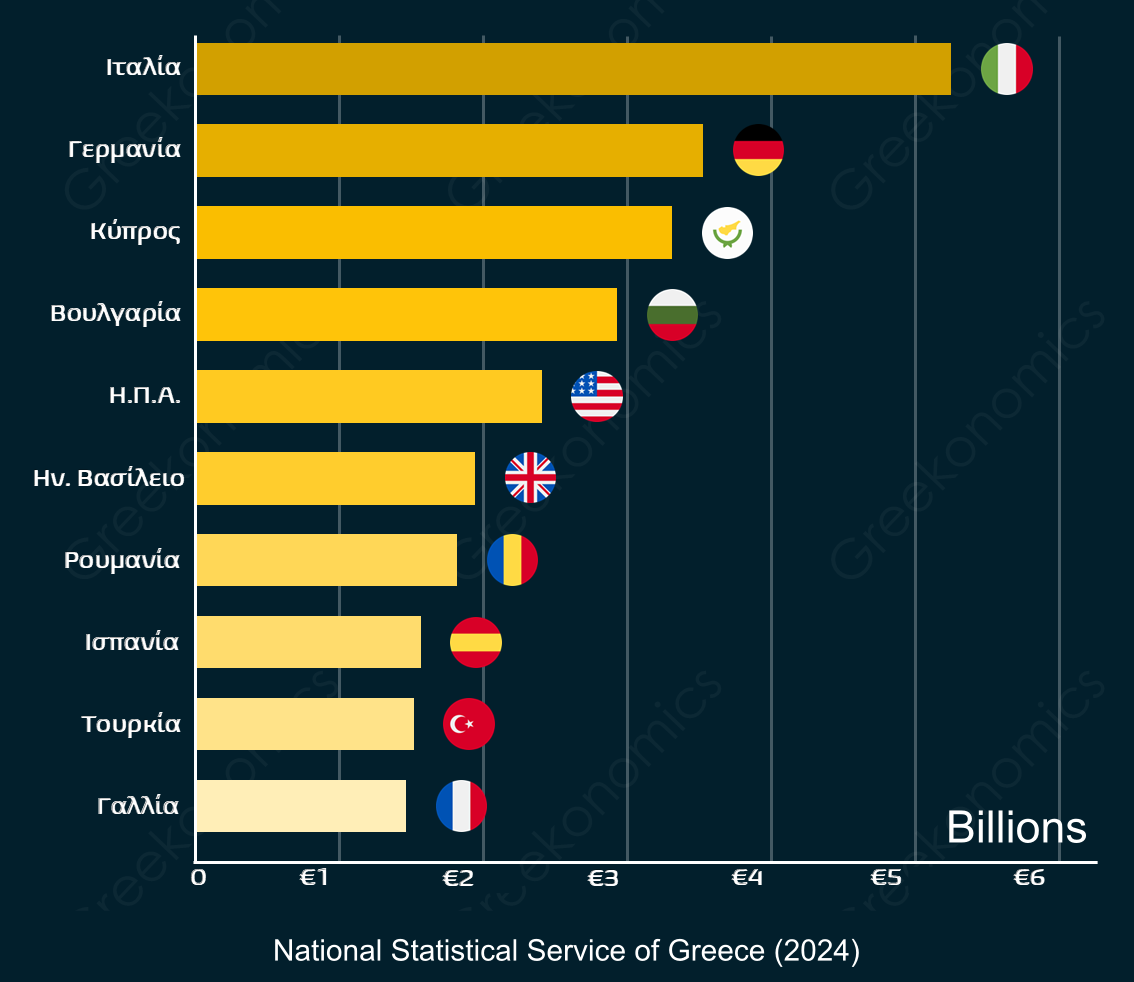
Trade balance
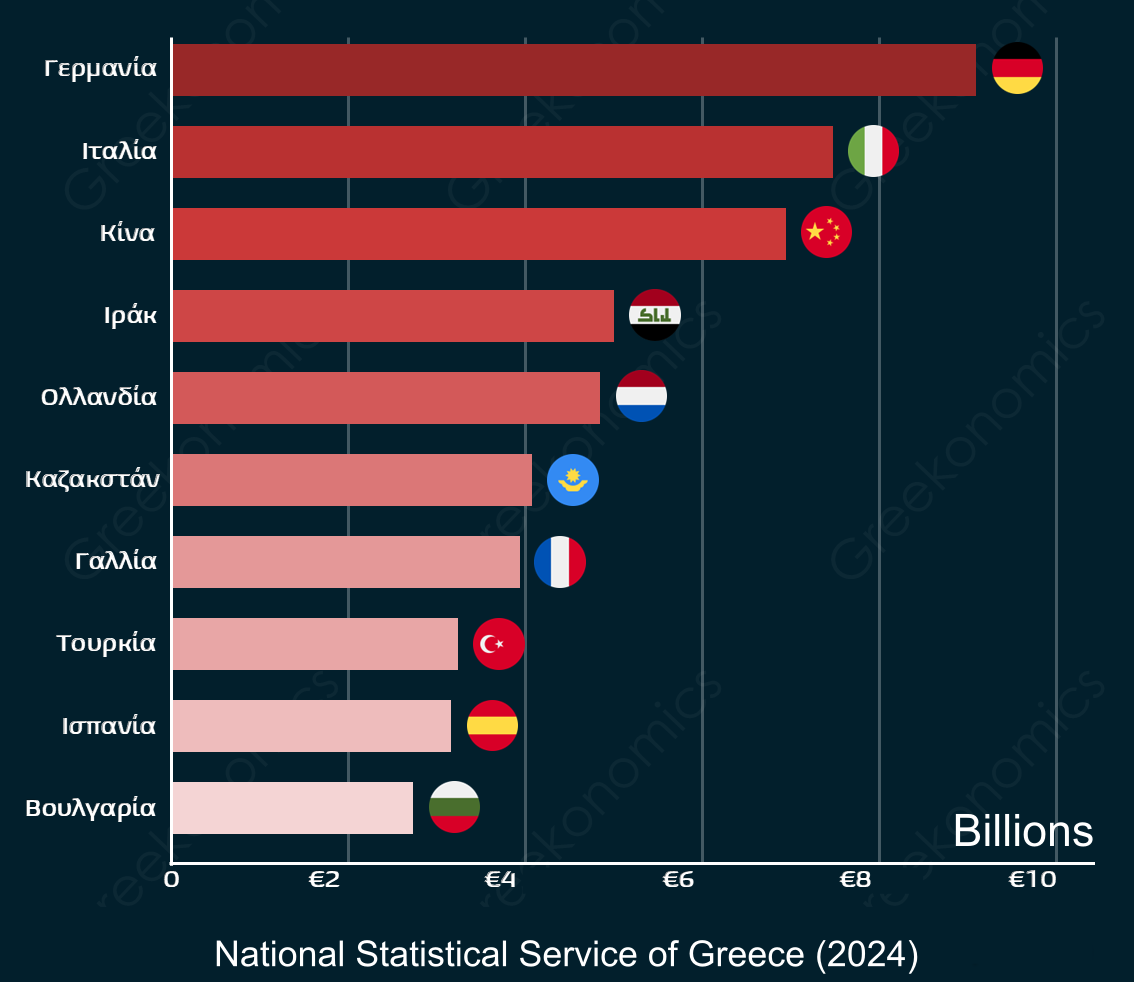
In 2024, Greece recorded a trade balance deficit of 34.6 billion euros, an increase of 7.9% compared to the previous year. The products with the largest volume of trade transactions were mineral fuels and lubricants, as despite the significant re-export of refined products, Greece’s energy dependence on oil and natural gas from abroad continues to weigh on the overall balance. At the same time, large amounts are also spent on the purchase of foreign machinery and industrial goods and materials, reflecting the need for the development of modern technological and industrial infrastructure in the country. On the other hand, Greek foods remain relatively more competitive abroad. The significant presence of Greek olive oil in international markets as well as the net exports of beverages and tobacco create a balanced trade of food and agricultural products. It is easy to see that foreign trade is not the main asset of the country. To reverse this image, there must be serious investment in innovation and technology, so that Greece can also produce high added value products.
Youth precarity (age 17-34)
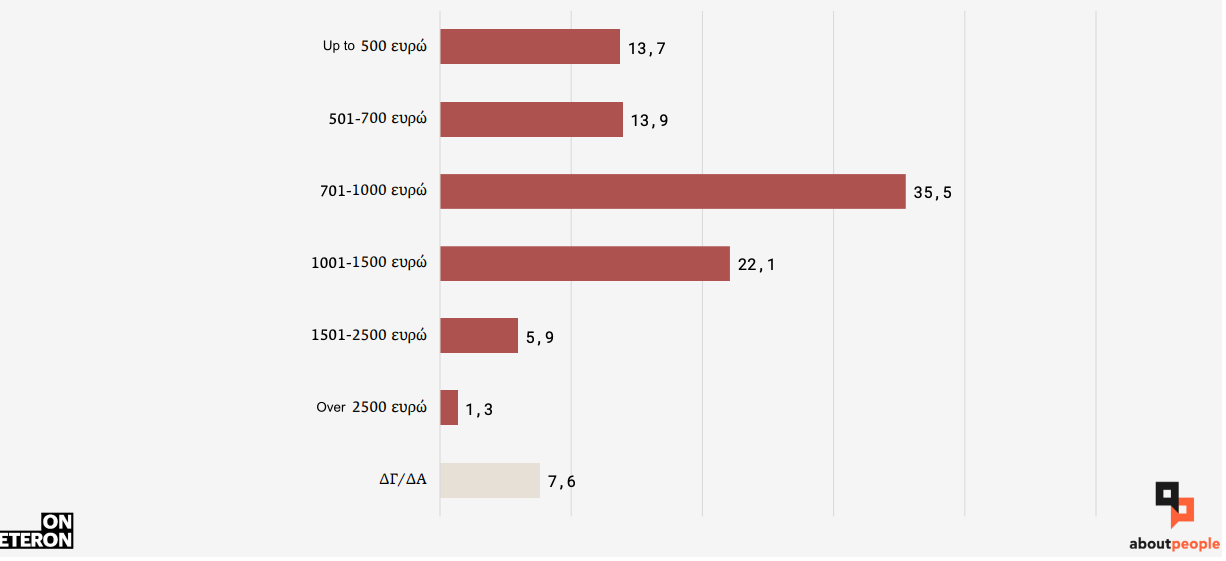
- 70% of young workers have a monthly income of less than 1000 euros
- 1 in 3 people struggle significantly to meet their monthly needs and limit themselves to the bare essentials
- 3 in 8 people are currently doing or have done in the past second or multiple jobs alongside their main employment
- 35.9% of young people report that they work over 40 hours a week
- 52.8% of young people respond that the hours stipulated in their contract are not being adhered to
- 36.3% of young people are neither compensated nor given time off for the overtime they work
Overtourism
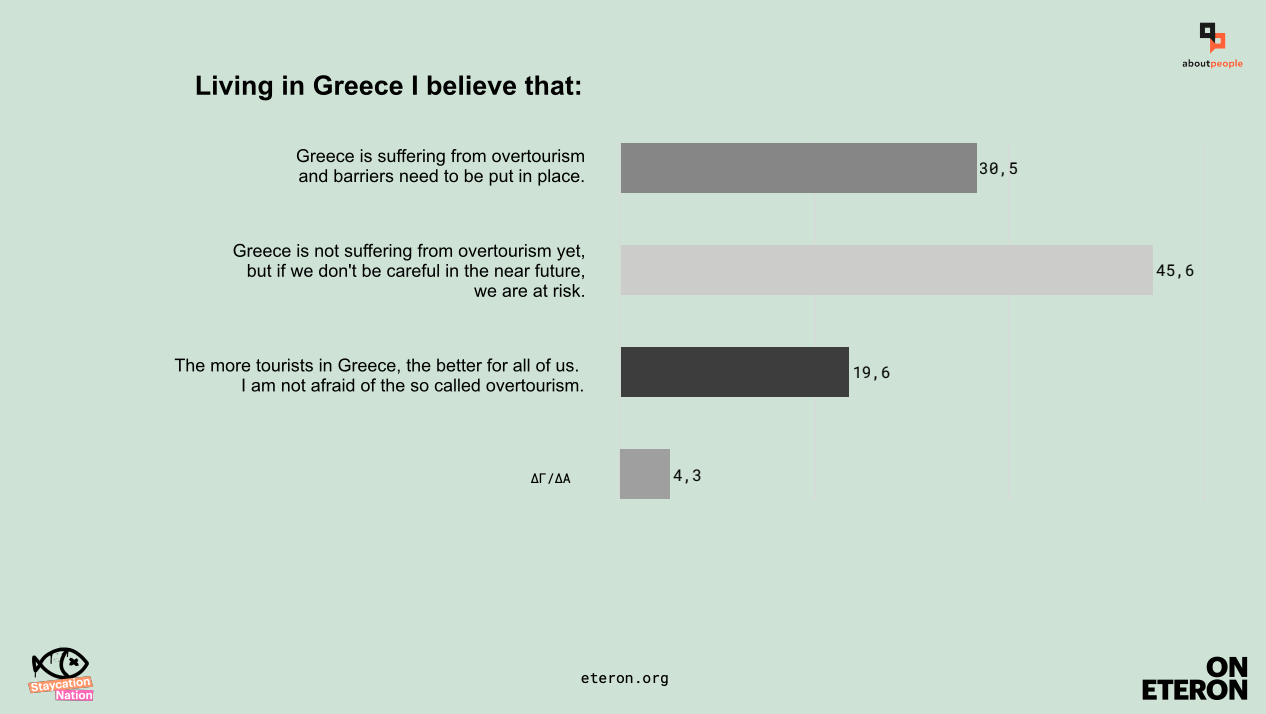
- Although 74.4% believe that the impact of tourism is positive for the country (economy, jobs, cultural events), at the same time 76% consider that Greece is either already suffering from overtourism or will suffer very soon without measures (environmental pollution, rising costs, rents)
- 88.8% agree or somewhat agree with the protests that took place in Greek islands where fewer sun loungers and more free beaches were requested
- 59.4% of participants agree or somewhat agree with the protests and reactions against overtourism taking place in various cities across Europe
Trust in Institutions
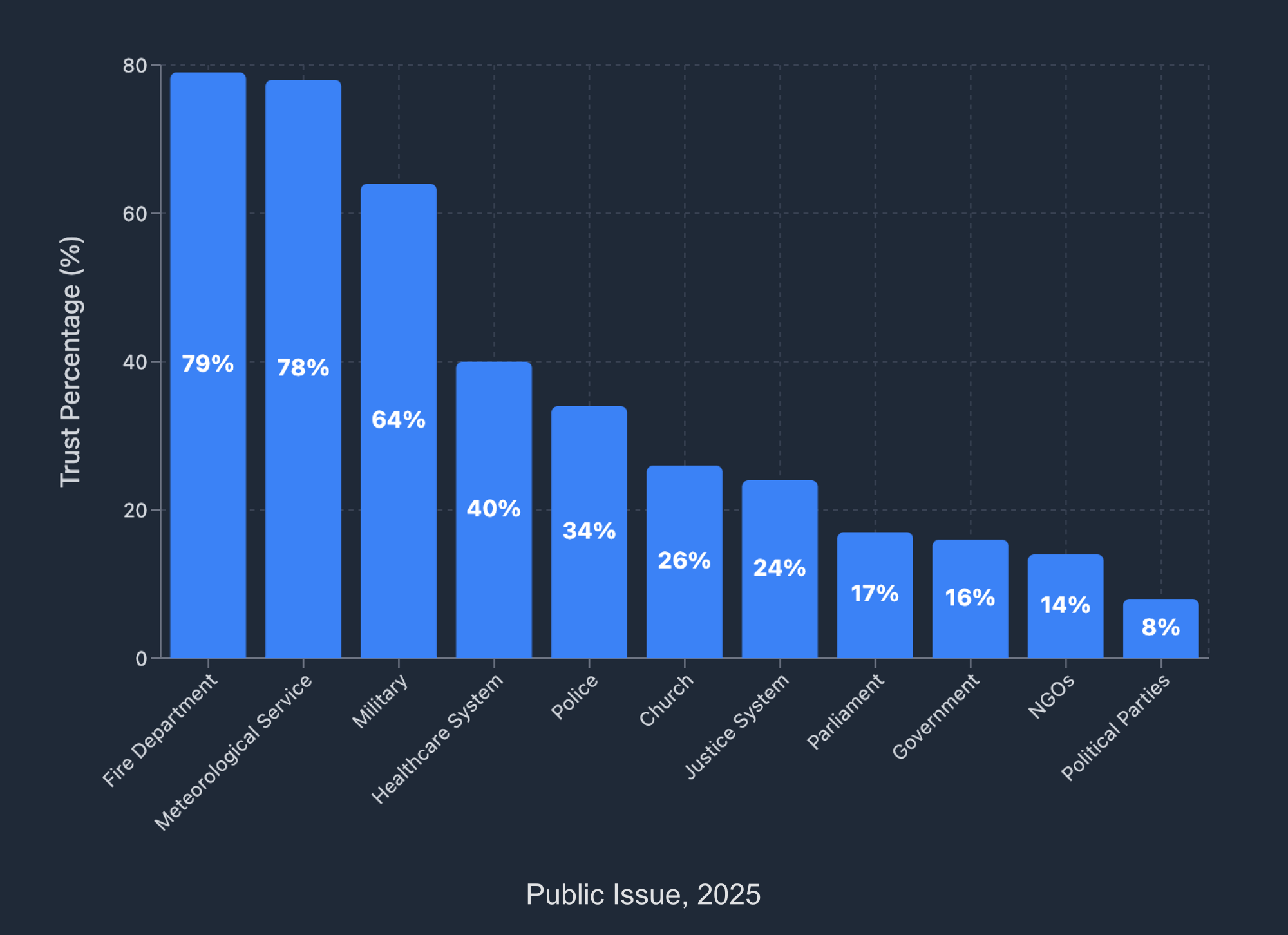
The crisis of institutions in Greece deepens: The current devaluation of political parties in Greece has brought the crisis of social trust in the party system back to the levels of 2011. But most importantly, only 1 in 4 citizens (24%) trusts the Greek justice system today (the rapid decline recorded in 2023 continues at a slower pace in the two years 2024-25)!
Golden Visa
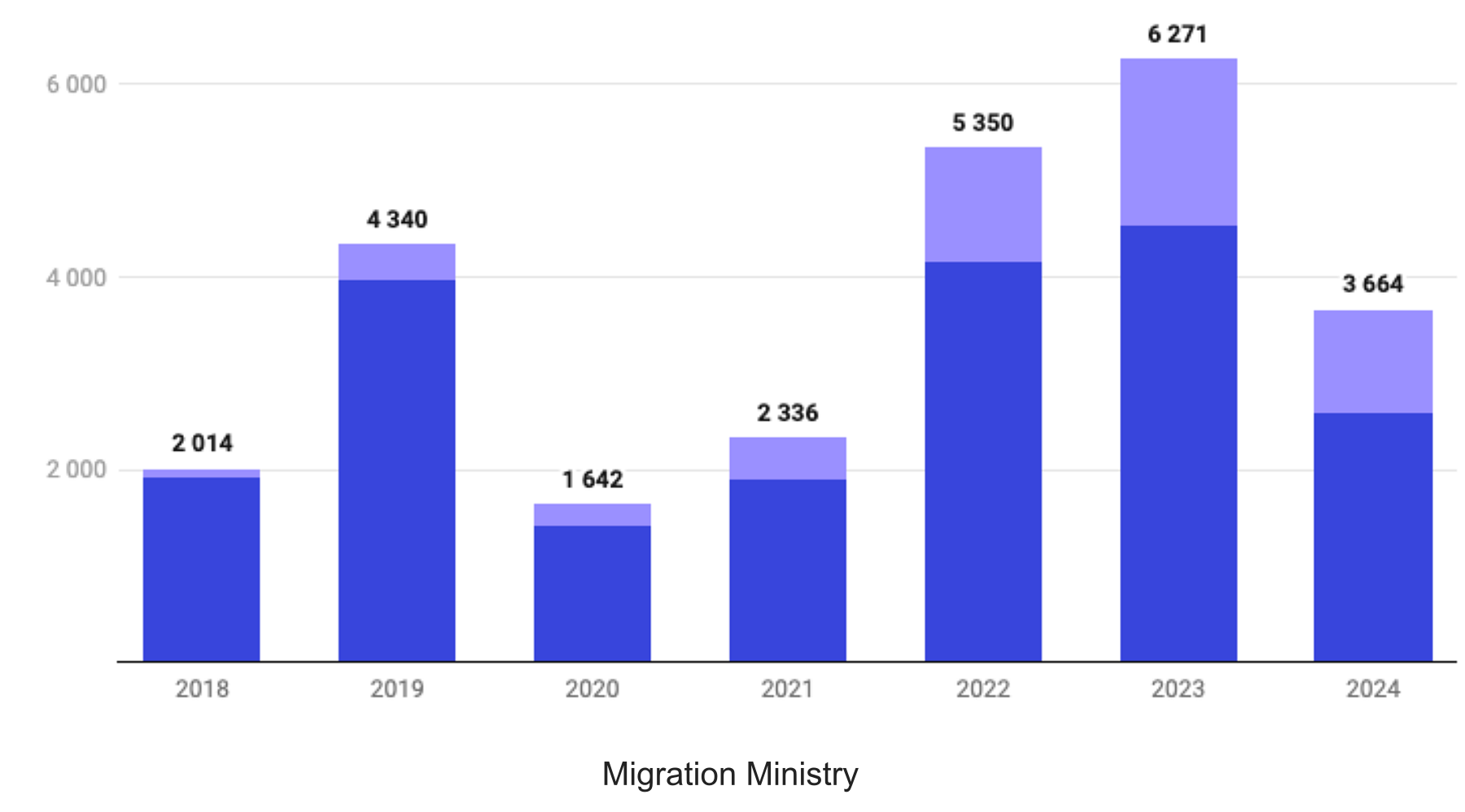
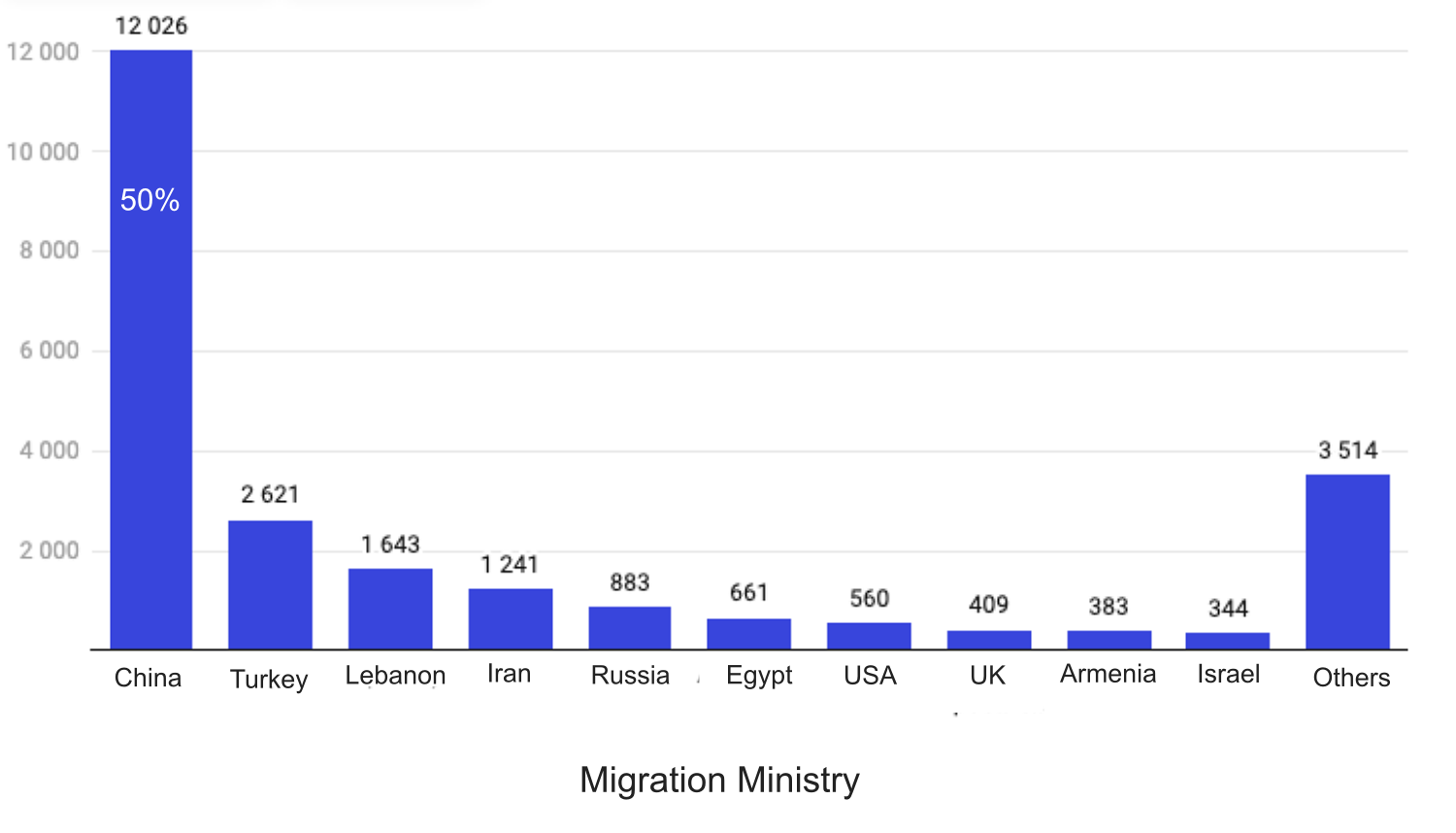
Greece launched its “Golden Visa” in 2013 to kick‑start the post‑crisis property market and attract foreign capital, setting the investment bar at just €250 000 in real estate—then the EU’s lowest threshold. Amid surging rents and Airbnb‑fuelled housing pressure, the minimum doubled to €500 000 in 36 high‑demand municipalities in 2023, and from 2024 a new two‑tier regime was imposed: €800 000 for Athens, Thessaloniki, Mykonos, Santorini and similar hotspots, €400 000 for the rest of the country, while the €250 000 level now survives only for commercial‑to‑residential conversions or listed‑building restorations. Although the programme has channelled billions into Greek bricks‑and‑mortar, it has also fuelled gentrification, pushed local buyers out of the market and left the immigration service wrestling with a backlog of more than 52 000 pending permits in 2025.
Inequality
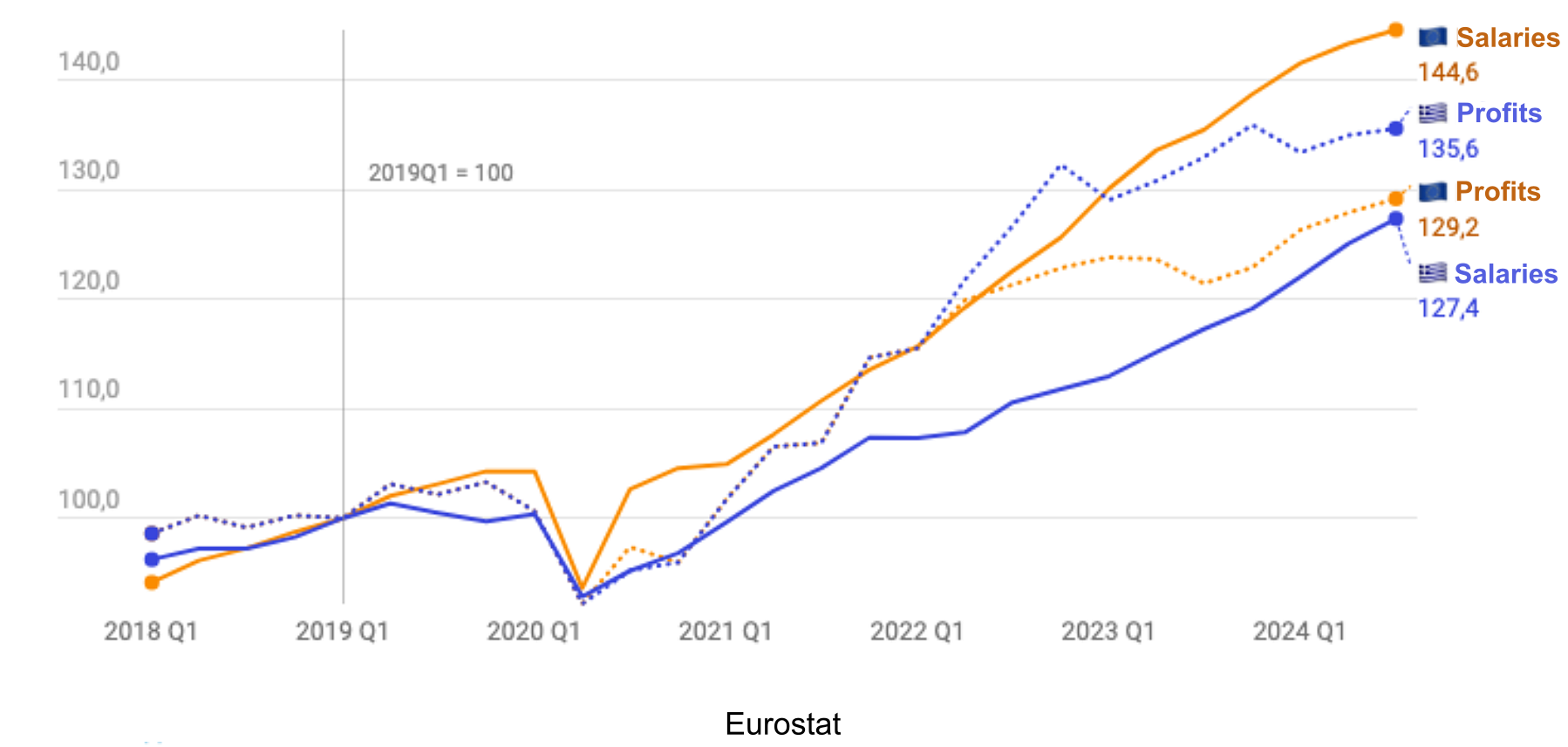
In the graph below you can see the gap between salaries and corporate profits in Greece and their difference from EU ‘s.
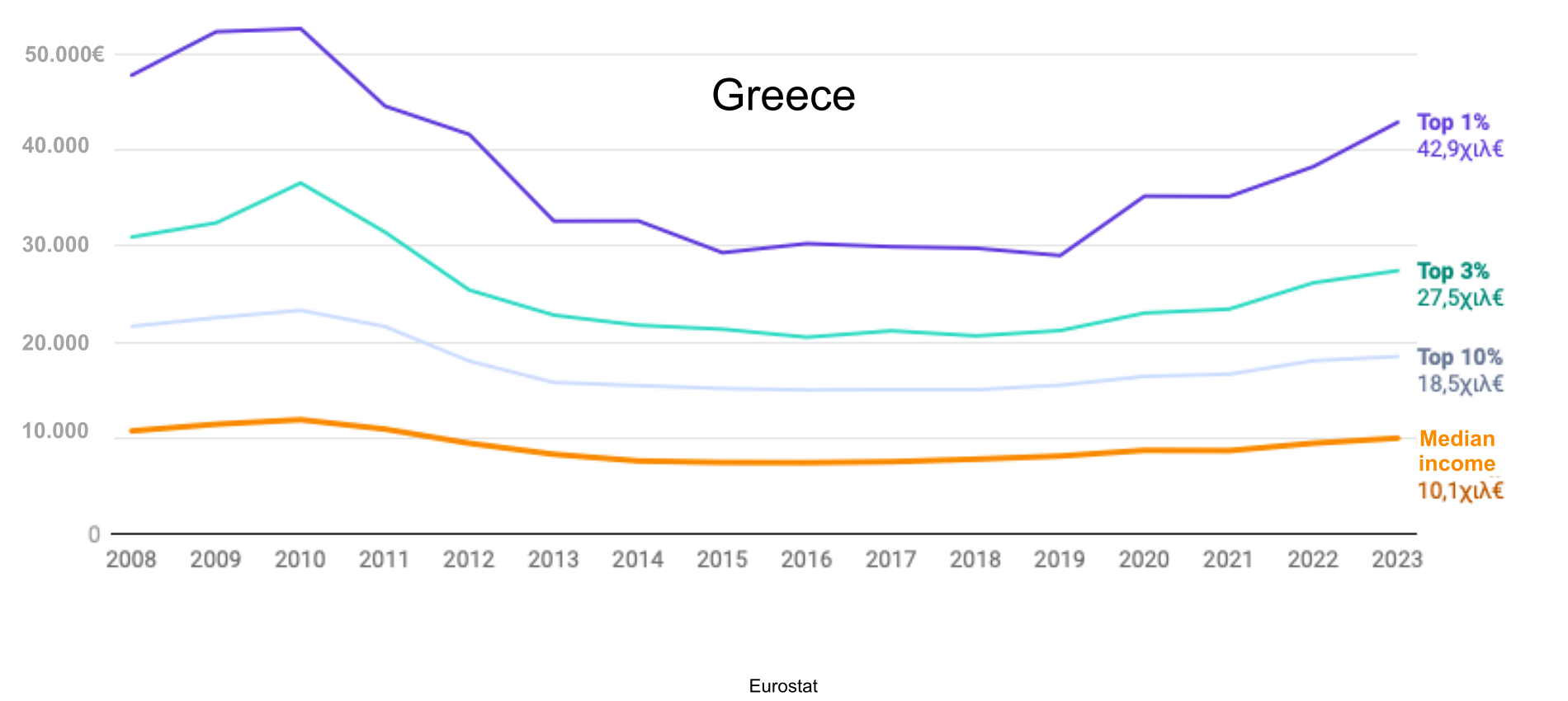
In the graph below you can see that while the median income increased by 8% over the last 2 years, the income of the richest 1% rose by 22% – nearly three times as much!
Welfare State dismantling
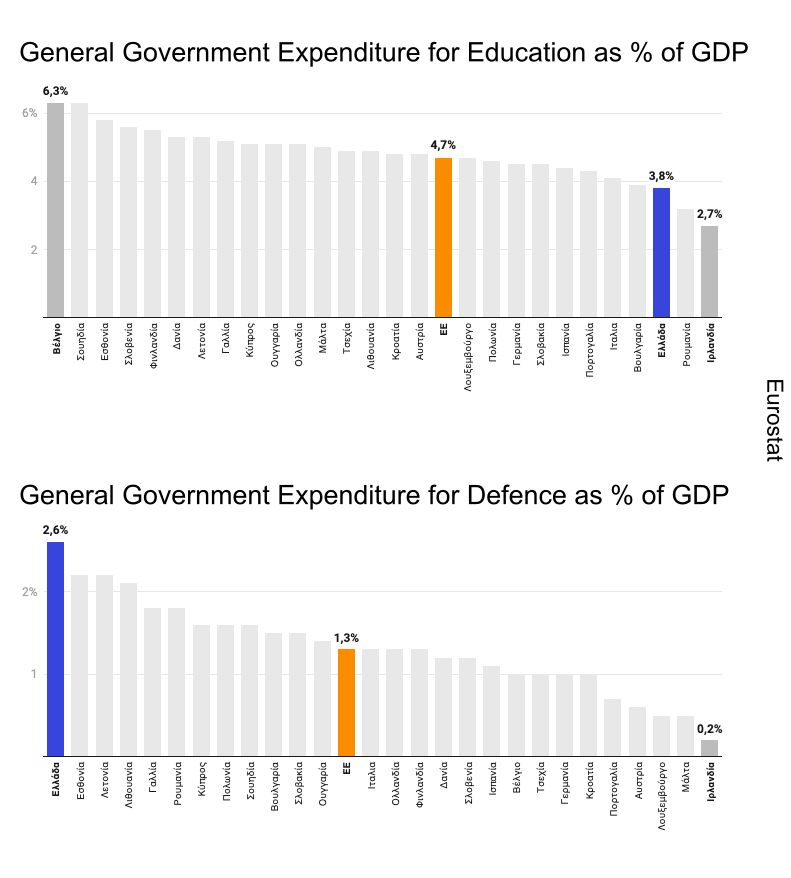
Education Vs Defence: General Government Expenditure as a percentage % of GDP
Electoral participation
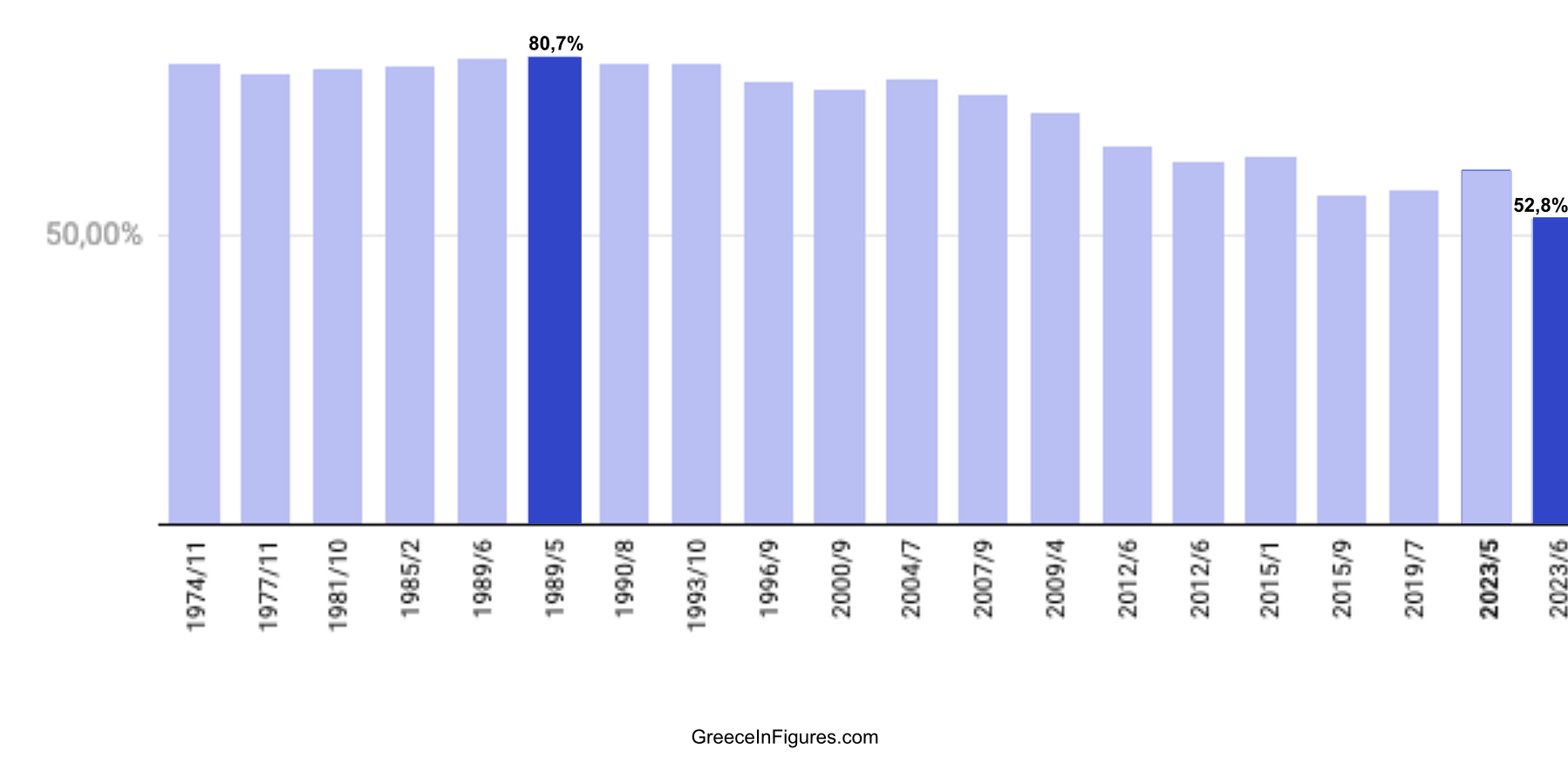
From 1974 to 2007: 80%-75%
From 2009 to 2015: 70% – 65%
From 2019 to 2023: 60% – 50%
Press freedom
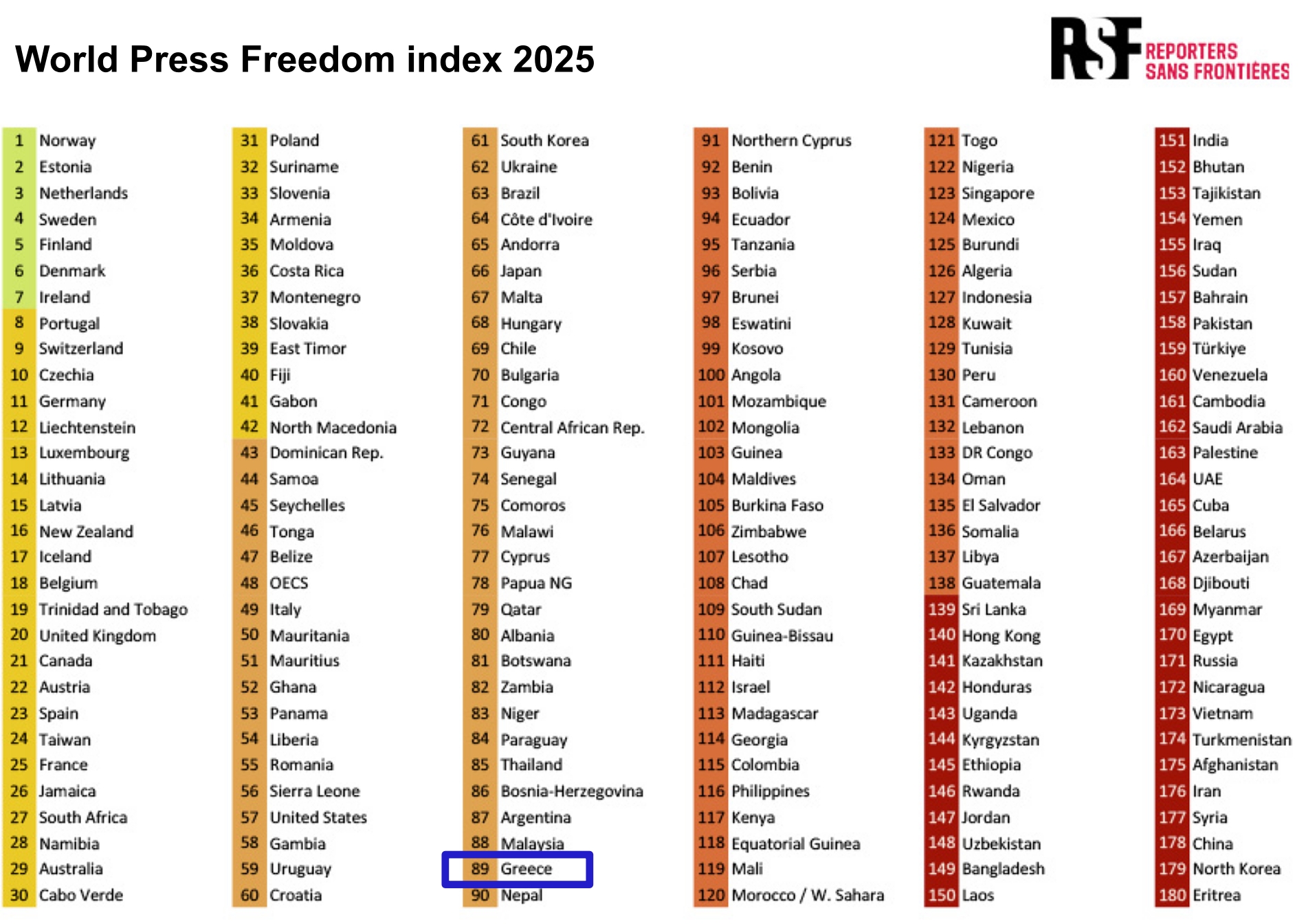
Press freedom has suffered a systemic crisis since 2021. The scandal of the wiretapping of journalists by the National Intelligence Service (EYP) has yet to be cleared up, as is the case regarding the murder of veteran crime reporter Karaivaz in 2021. SLAPP procedures are common. The population’s trust in the media has been one of the lowest in Europe for many years. A few large privately owned groups run the vast majority of media while being involved in other highly regulated business sectors. They have also close ties to the country’s political elite. Greece falls to 89th in Global Press Freedom rankings, lowest in the EU for fourth year running.
The Rule of Law in Greece
In key areas, Greek institutions consistently fail to uphold the principles of legality, equality, and transparency. This failure is compounded by a persistent absence of accountability for those in positions of power who are deemed responsible for such violations. Govwatch’s findings are not merely a compilation of isolated incidents. They constitute evidence of a systemic pathology and an institutional crisis that undermines the very functioning of democracy. The need for immediate and meaningful reforms in lawmaking, accountability, and the protection of rights is now urgent and undeniable.